

Pulse AI
From raw ECG data to AI-assisted clinical insight - built and validated in a two week sprint
A proof of concept that demonstrated how AI can support faster, more informed cardiac diagnosis.
The problem
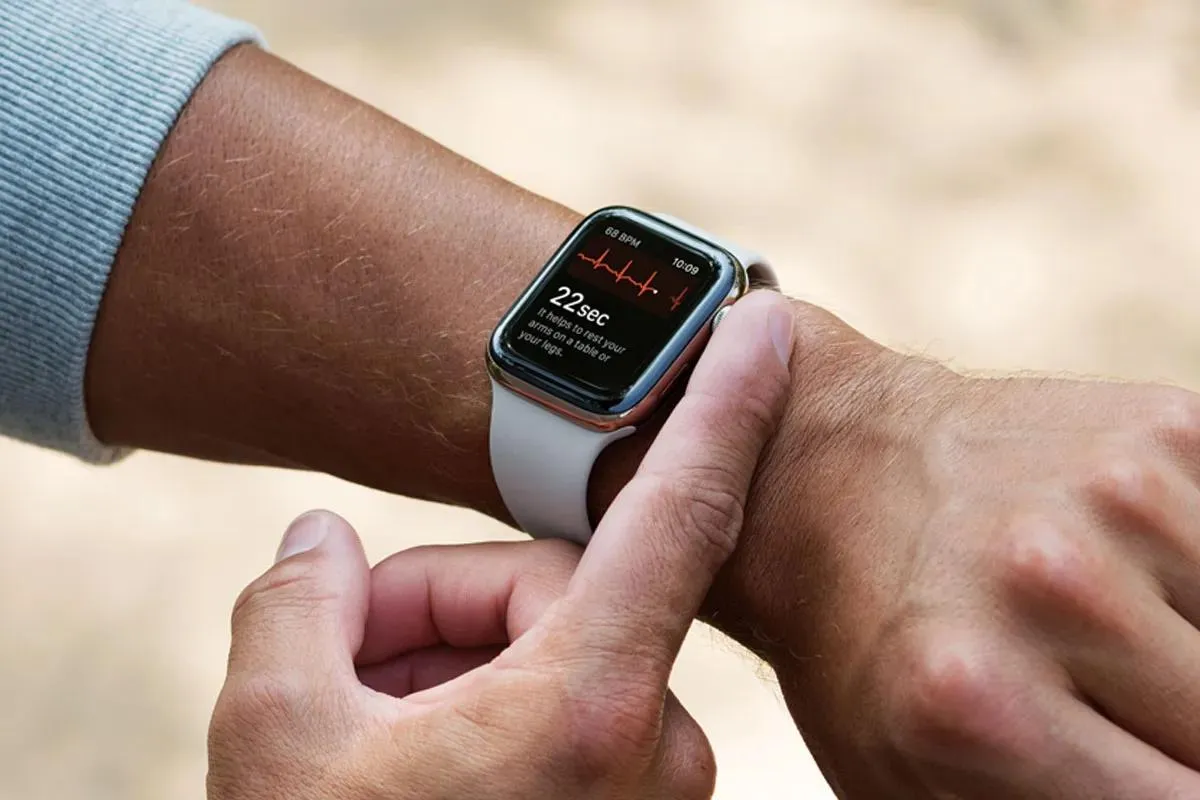
ECG data is complex, high volume and difficult to interpret quickly, especially in time sensitive clinical environments. Pulse AI had already solved the data capture problem. Their wearable monitor streams hundreds of readings per second to the cloud, where AI algorithms automatically detect irregular patterns.
But the findings had nowhere useful to go. Clinicians were left with raw data traces and no clear way to see what the AI had flagged, where the anomalies were or how to act on them quickly.
The challenge wasn't collecting the data - it was making sense of it. A proof of concept was needed to explore how ECG data and detected arrhythmias could be visualised and presented in a way clinicians could interpret and act on with confidence.
What we built
We engineered a proof of concept that connects AI detection to a clear, usable clinical interface.
The product takes data from Pulse AI’s wearable monitor and presents it through an interactive dashboard designed specifically for interpreting long-form ECG recordings. Instead of reviewing raw traces, clinicians can quickly see where anomalies have been detected and focus on the areas that matter.
Recordings are broken into manageable segments, allowing clinicians to scan large volumes of data quickly. Selecting a segment reveals a detailed ECG trace, with irregular patterns highlighted and contextualised so they can be assessed more easily.
Clinicians can explore what happened before and after each flagged event, add anomalies the AI may have missed and remove false positives, keeping them in control of the interpretation process throughout.
The result is a product that bridges the gap between what the AI detects and what a clinician can confidently act on.
Why it worked
It worked because the focus wasn’t on improving the AI - it was on making it usable.
Pulse AI could already capture and analyse ECG data at scale. The problem was that clinicians couldn’t easily interpret what the AI was finding.
By designing the product around how clinicians actually review data - starting with an overview, then moving into detail - the proof of concept made those insights easier to understand and act on.
Instead of replacing clinical judgement, it supported it, helping clinicians move from raw data to informed decisions more quickly.
Built in just two weeks, it allowed Pulse AI to test the idea quickly and prove its value early.