Product Strategy & Discovery
Software Discovery
Define the software the business will run on. Before you commit to building it.
Our software discovery sprint is a structured 4-6 week discovery sprint for complex software and digital transformation projects, where getting the definition right is the difference between a successful outcome and a costly one.

Software Discovery defines what needs to be built, how it fits into the business and what it will take to deliver, before anyone commits to the build.
What is a software discovery sprint?
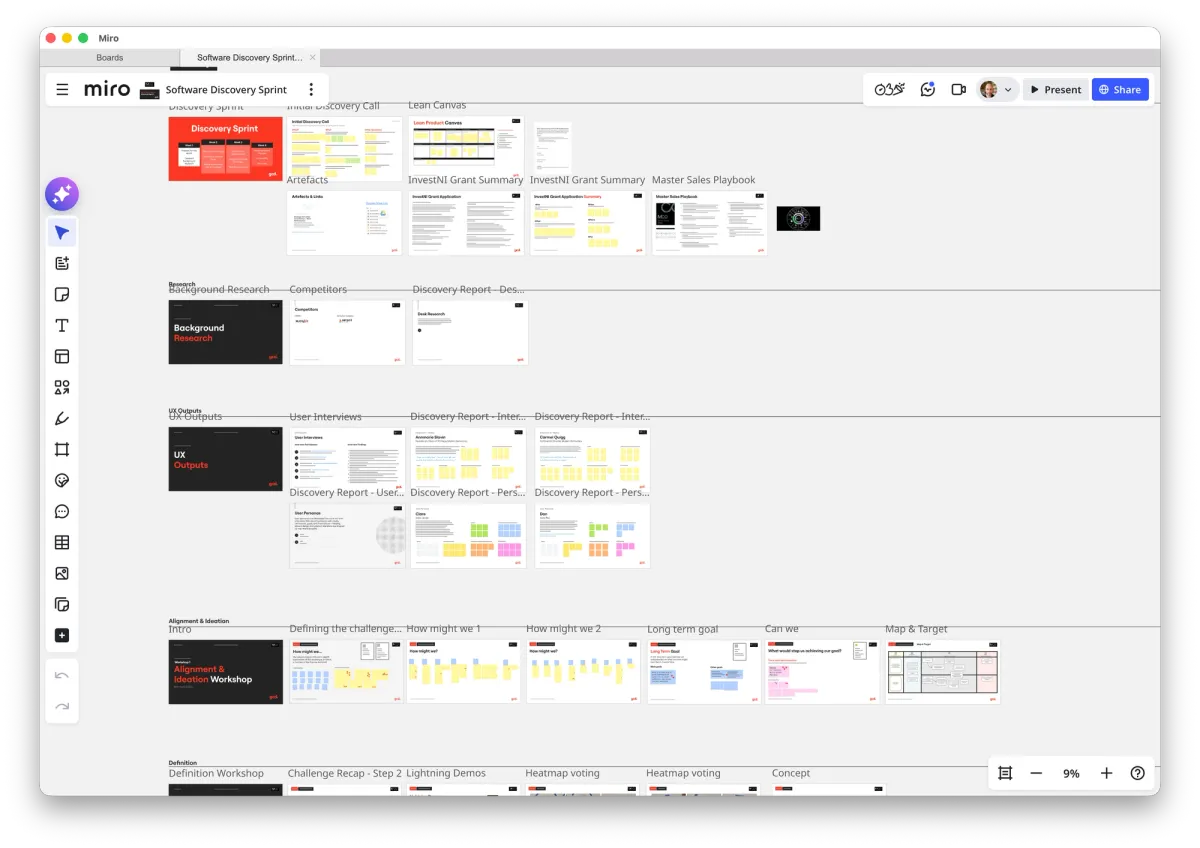
A focused, 4-6 week sprint that takes a complex software project from intent to fully defined roadmap, ready to build with confidence.
Unlike product discovery, where the focus is shaping and validating a product idea, a software discovery sprint is about defining a software solution that the business already knows it needs. The work isn’t whether to build, it’s what to build, how to build it and what it will take to deliver.
Who it's for?
-
Businesses planning a major software programme
You’re investing in software that will run a significant part of the business, like an ERP, core operational platform, customer system or bespoke internal tool. You need to know exactly what you’re committing to before you commit.
-
Digital transformation initiatives
You’re modernising how the business operates, replacing legacy systems or unifying fragmented tools into a single platform. The success of the programme depends on getting the definition right up front.
-
Mission critical system replacement
You’re replacing software that’s critical to daily operations. The new system has to do everything the old one does, plus everything the business now needs, without breaking what already works.
-
High-risk projects
Significant budget. Multiple stakeholders. Long delivery cycles. The kind of project where late surprises are expensive and avoidable surprises shouldn’t happen at all.
How we do it
Every Software Discovery starts with the short question 'why?'. Whether you're replacing an existing system or building something new, the challenge, and the opportunity behind it, has to be fully understood and documented before anything else.
-
1. Understanding the problem
We start by getting deep into the business and the challenge it's facing.
- Onsite visit to see the business in context and walk through key processes
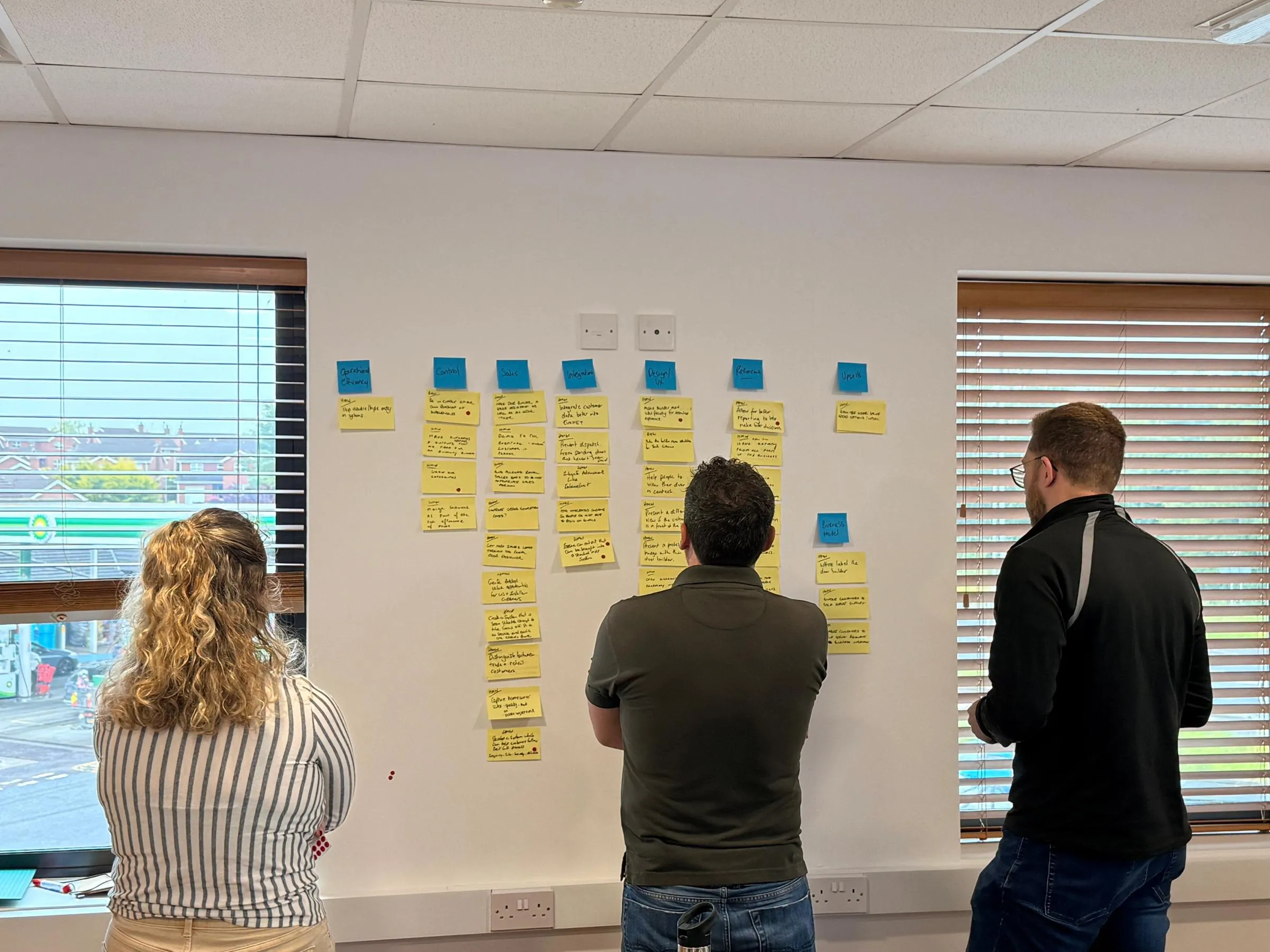
- Discovery Workshop with the key team to define the challenge, objectives and goals
- Identify risks, constraints and the stakeholders that need to be aligned
-
2. Research
With a clear understanding of the problem, we move into focused research.
- Review existing technologies, APIs, integrations and documentation
- Interview and shadow the people who will use the final solution
- Build a clear picture of how the business works today and where the real opportunities sit
-
3. Exploring ideas
We start translating the research into a shape the solution can take.
- Develop UX flows, user journeys and system maps
- Define the information architecture aligned to the requirements
- Produce higher-fidelity designs where it adds value, though not always needed at this stage
-
4. Defining a solution
We bring everyone back together to refine and prioritise the solution.
- Definition Workshop to present findings and walk through the proposed solution
- Apply a MoSCoW (must have, should have, could have) approach to the requirements
- Agree a prioritised requirements list, focused on what matters most
-
5. Final presentation
We close the sprint with everything you need to decide on the validity of the project.
- Detailed proposal and project outline
- Clear roadmap and estimated budget
- Prioritised requirements list
What we cover
Software Discovery looks at the full picture of what it will take to deliver. Not just the software itself, but the business, technical and delivery context it has to fit into.
What you get
Upon completion of the Software Discovery, the challenge will have been fully explored and documented. You'll have everything you need to make an informed decision about whether to move forward with the build.
Project Plan
A clear, validated definition of what the software needs to do, who it's for and the outcomes it has to deliver for the business.
Success metrics
The measures the project will be judged against, agreed up front so success is defined before delivery begins, not after.
Prioritised requirements list
A MoSCoW-prioritised list of what the software has to do, what it should do and what could come later, so investment goes where it matters most.
Timeline and roadmap
A clear view of what gets built and when, with realistic timelines, phasing and milestones the business can plan against.
Estimated project cost
An estimated project cost, aligned to the requirements and delivery plan, giving the business a realistic view of investment before committing to the build.
Risks and dependencies
The technical, operational and commercial risks surfaced early, with a clear plan for what it will take to mitigate them.
Identified AI opportunities
Where AI creates real value in the solution, how to embed it safely and what it would take to deliver.